A consistent brand style across AI ads starts with decisions you can describe and review. Colors, lighting, product presentation, casting, and language all contribute. A logo alone cannot make unrelated scenes feel like the same brand.
ToMarket's Style worlds help set a visual direction for supported video formats. Pair that direction with accurate product references and a small set of brand rules so each new creative has a useful starting point.
Turn the brand guide into production decisions
A long brand document may contain useful principles, but an ad brief needs specific instructions. Pull out the details that affect the creative you are making now.
For example: warm daylight, quiet backgrounds, close product details, restrained camera movement, and direct language. If the product has distinctive packaging, name the details that must remain recognizable.
Separate the fixed elements from the flexible ones. Packaging color and logo placement may be fixed. Location and composition may change from ad to ad. That distinction helps you explore without losing the product's identity.
Use references with a clear purpose
A reference image can establish a product, a mood, or a composition. Those are different jobs. Make it clear which part of a reference you want to preserve.
If you provide a product photograph, explain that the packaging shape and color must stay accurate while the setting can change. If you use a mood reference, describe the lighting or materials rather than asking for an exact copy of the whole scene.
For product-focused image work, the AI product photography guide covers how to review fidelity before using a generated asset in an ad.
Choose a Style world for the message
In a video format that supports Style worlds, select a direction that fits the offer and the story. A highly stylized scene may suit one concept while making another product harder to understand.
Think about the whole ad: the opening, the product appearance, the people or characters, and the closing message. The style should support those parts together.
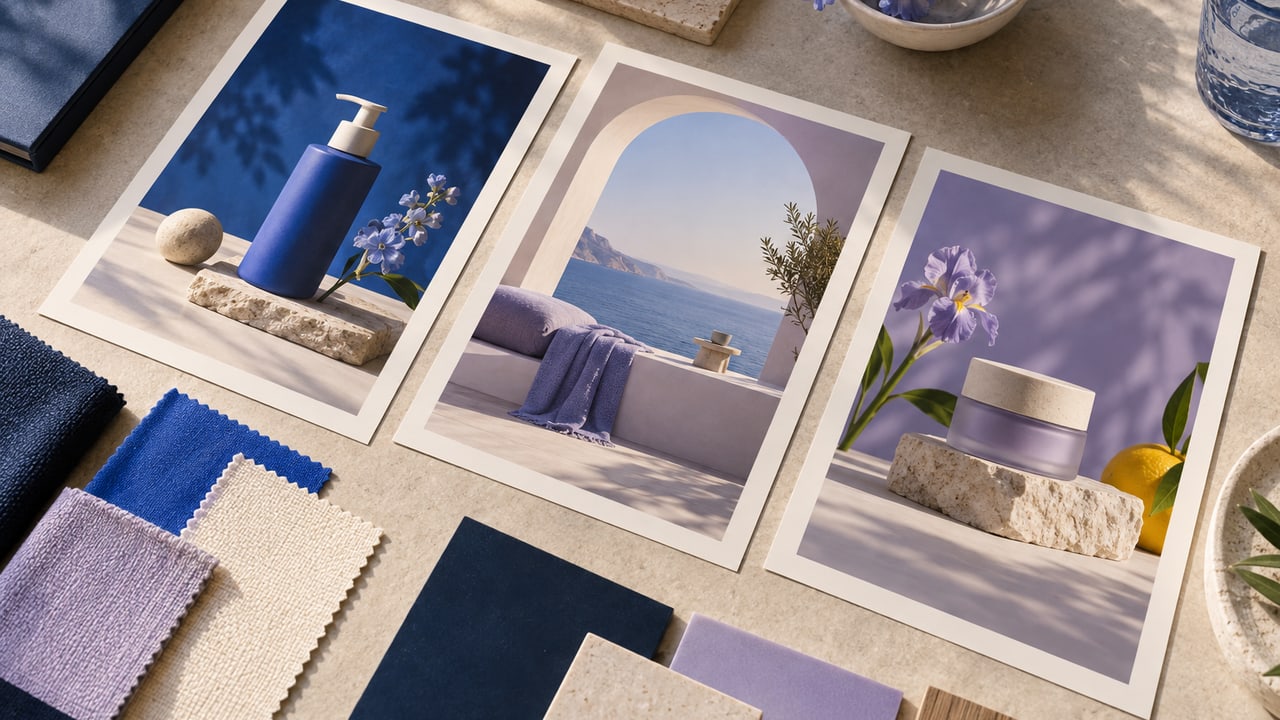
A direction such as "bright studio product presentation with cobalt accents" gives a clearer review standard than "premium." You can judge whether the scenes match the former. The latter can mean very different things to different people.
Preserve the brief when making variations
Keep an approved brief and the references that produced a useful result. When you make a new ad, identify what you are changing: the product message, the scene, or the opening idea.
For a fictional skincare product, one variation might focus on the bottle and another on the setting where it is used. Both can share the same lighting direction and packaging rules while communicating different ideas.
Changing every creative decision at once makes it difficult to understand why a new result feels different. A repeatable brief makes review easier even when the final ads are intentionally varied.
Review consistency at the scene level
Check more than the first frame. Look for changes in packaging, color, wardrobe, character appearance, or visual treatment across the video. Review the final render after approving the script and opening frames.
Typography and captions deserve the same attention. Keep the text readable and the phrasing aligned with your brand voice. A visually restrained ad can still feel inconsistent if its captions use exaggerated language.
For avatar-led creative, use the same role and delivery criteria described in choosing an AI avatar. Visual consistency includes how a presenter fits the scene.
Keep room for useful creative differences
Consistency does not require every ad to have the same background or composition. Different messages may need different ways of showing the product. The goal is to make those differences feel intentional.
Use a small set of recognizable elements, then let the creative serve the particular offer. A coherent campaign can contain product images, explainers, and stories without making each one a copy of the last.
Explore the available Style worlds in ToMarket Ad Studio, then pair your chosen direction with a concrete brand brief and accurate references.